


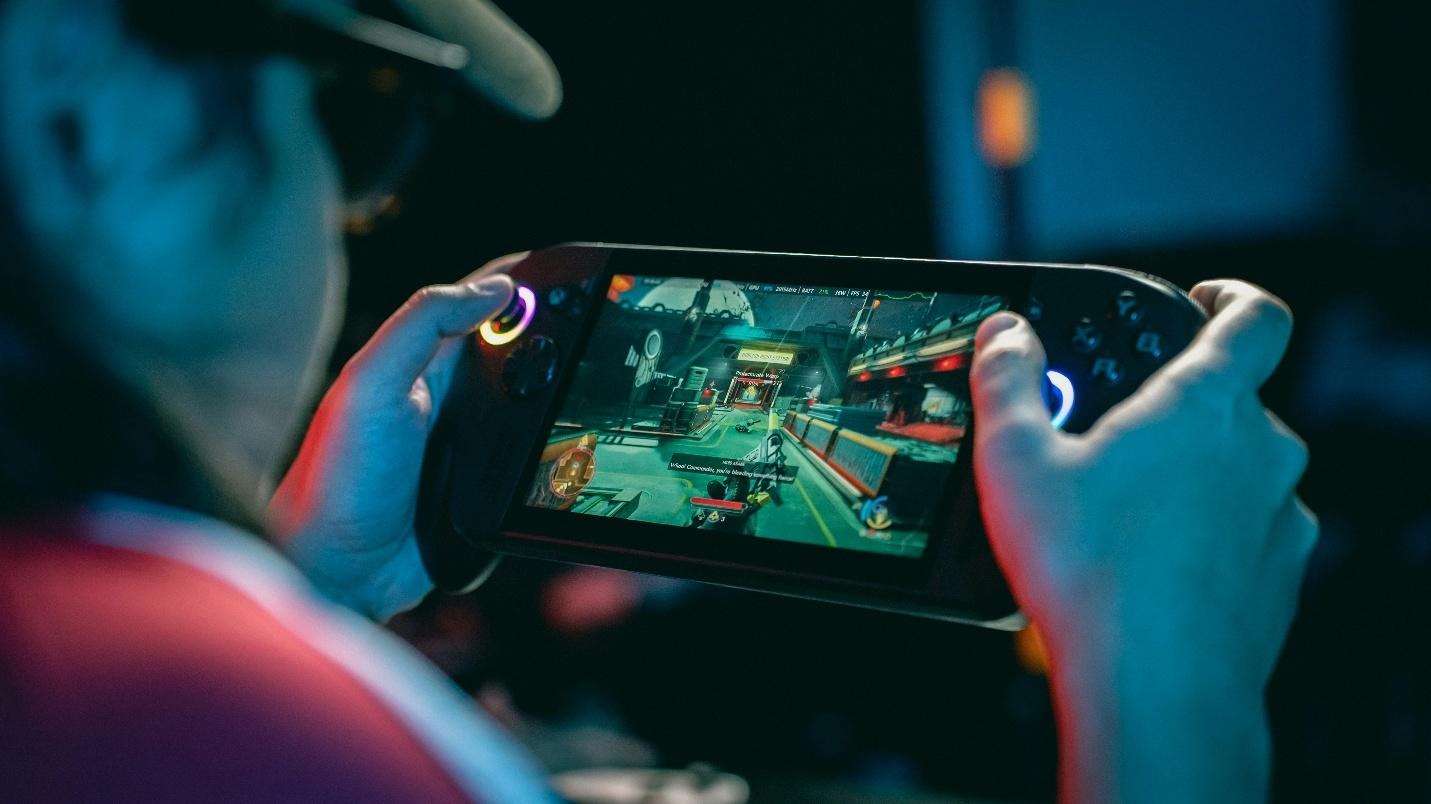
Imagine starting a game and feeling like it somehow… understands you.
Not in a creepy, science-fiction way. More like the game just fits. You’re challenged, but you’re not stuck. You feel like you’re improving, but the game never becomes boring.
If you’ve ever had that experience, there’s a good chance the game was quietly adjusting things behind the scenes.
For a long time, games relied on a very simple system: you chose a difficulty level at the start—easy, normal, or hard—and that decision shaped the entire experience. But the problem with that system is that it assumes you already know what difficulty suits you.
Most of the time, you don’t.
Some parts of a game might feel easy to you, while others feel unexpectedly tough. Maybe you’re great at combat but struggle with puzzles. Or maybe you learn mechanics slowly but eventually become very good at them.
That’s where adaptive gameplay comes in. The game doesn’t lock you into a certain level of difficulty; instead, it changes according to how you play.
And often, you never even realize it’s happening.
The Game Is Quietly Watching How You Play
Think about how you approach a game.
You might wish to see every part of the map. You might hurry toward your goals. You can rely heavily on one weapon or technique because it works well for you.
These patterns can be seen in games nowadays.
They can keep track of things like how often you fail specific tasks, how quickly you finish them, or which tactics you use most often.
None of this data is complicated by itself, but when it’s combined, it tells the game something important: how comfortable you are with the current challenge.
If you keep failing a fight, the game might slightly reduce enemy aggression or give you a better checkpoint. If you’re dominating every encounter, enemies might react faster or appear in slightly larger numbers.
These adjustments are usually tiny.
You don’t get a message saying “difficulty reduced.” Instead, the next attempt just feels more manageable.
And you move on.
Why This Feels Better Than Traditional Difficulty
Think back to the last time you chose a difficulty setting in a game.
Did you feel confident about that choice?
Probably not completely.
Sometimes “normal” feels too easy. Other times it feels unexpectedly punishing. You might even restart the game later just to pick a different setting.
Adaptive gameplay removes that guesswork.
The game doesn’t ask you to make all the decisions ahead of time; it sorts things out as you play. It figures out which problems you can solve quickly and which ones take longer.
From your perspective, the experience simply feels smoother. You stay engaged without constantly hitting frustrating walls.
You’ve Probably Experienced This Without Realizing It
This idea isn’t entirely new.
Racing games have quietly used similar tricks for years.
Have you ever noticed how opponents sometimes stay just close enough to keep the race exciting?
If you fall behind, they don’t disappear completely. If you’re leading comfortably, they suddenly push harder.
That tension is often intentional.
Sometimes, action games change how enemies act based on how you battle. Enemies might start to act differently if you keep using the same strategy. It encourages you to attempt something new.
Survival games do something similar. If you struggle to stay alive, the game might subtly increase resource availability. If you’re thriving, the environment might become harsher.
What’s interesting is that this approach—studying behavior patterns to improve systems—exists far beyond gaming. Analytical platforms analyze performance data and patterns in online sports and eSports betting environments (i.e., online operators) to uncover trends and bonuses, above all, that might not be obvious at first glance. For Counter-Strike 2 betting, such analysis is available at https://bookmaker-expert.com/bookmakers/esport-betting/cs2/.
Game developers use the same idea to understand how you interact with their worlds.
Why You Rarely Notice the Changes
The funny thing about adaptive gameplay is that it works best when you don’t notice it.
If a game suddenly told you, “We’ve lowered the difficulty because you failed five times,” it would probably feel awkward. It might even make success feel less rewarding.
Thus, developers make these systems so that they can’t be seen.
The game doesn’t make significant changes; it only nudges things a little.
The adversaries might wait a little longer, maybe half a second. There might be an extra health pack nearby.
Maybe the next encounter is just a little less chaotic.
You rarely stop to think about these changes. You just feel like the challenge stays fair.
And that’s exactly the point.
What Developers Learn From Watching You Play
While you’re busy performing tasks or exploring the game environment, the devs are learning a lot from how you act.
Not about you as a person, but about patterns.
When large numbers of people play the same game, patterns start to appear. Developers can see where players tend to get stuck, which parts they move through easily, and which sections people clearly enjoy the most.
Those insights are incredibly useful. They help teams fine-tune updates, fix frustrating moments, and design better experiences in future games. Over time, this kind of feedback also makes it easier to create games that appeal to many different types of players, instead of forcing everyone to play at the exact same difficulty level.
There’s one place where this approach usually doesn’t apply, though: competitive multiplayer games.
When you’re playing against other people, fairness has to come first. The game can’t quietly adjust the difficulty in the middle of, say, a match, because that would affect the balance between players. That’s why adaptive systems are far more common in single-player experiences or cooperative modes, where they can help improve the experience without interfering with competition.
That’s why adaptive gameplay is most common in single-player campaigns and cooperative modes.
Should You Know When a Game Is Adjusting Difficulty?
Some players think games should be completely transparent about these systems. They want to know exactly how the game works.
Others prefer not to know.
If the game openly announces that it’s helping you, it might reduce the satisfaction of overcoming a challenge. The illusion of balance could disappear.
Developers are still figuring out the best approach. Some games offer optional difficulty adjustments you can enable manually, while others keep adaptive systems hidden entirely.
In most cases, the goal isn’t to trick you.
It’s simply to keep the experience enjoyable.
What This Could Mean for Future Games
Adaptive gameplay is still evolving, but the idea behind it is becoming more important.
Right now, most systems focus on balancing combat difficulty or resource availability. But the same idea could eventually influence many other aspects of gaming, not just combat difficulty.
Picture this: you solve a puzzle in a game almost instantly. The next one you encounter is a little trickier, just enough to keep you thinking. But if the previous puzzle took you a while, the game doesn’t suddenly throw something overwhelming at you. Instead, it keeps the challenge reasonable so you can move forward without feeling stuck.
The same idea could work with storytelling, too. Imagine a game where the story subtly shifts depending on how you behave in the world—how you treat other characters, the choices you make during missions, or the paths you decide to follow. Rather than everyone seeing exactly the same narrative, the game slowly shapes the experience around your actions.
Some developers are already experimenting with these ideas.
It won’t happen overnight, but games that respond more intelligently to player behavior are becoming more realistic every year.
A Game That Adapts to You
At the end of the day, the goal of adaptive gameplay is simple.
It tries to keep you in that perfect zone where the game feels challenging but never overwhelming. Where progress feels earned, but frustration doesn’t take over.
Instead of forcing you to adapt to the game, the game slowly adapts to you.
Most of the time, you won’t even notice it happening.
But the next time a game feels surprisingly well balanced—like it somehow understands your pace—you might be seeing adaptive gameplay at work.