


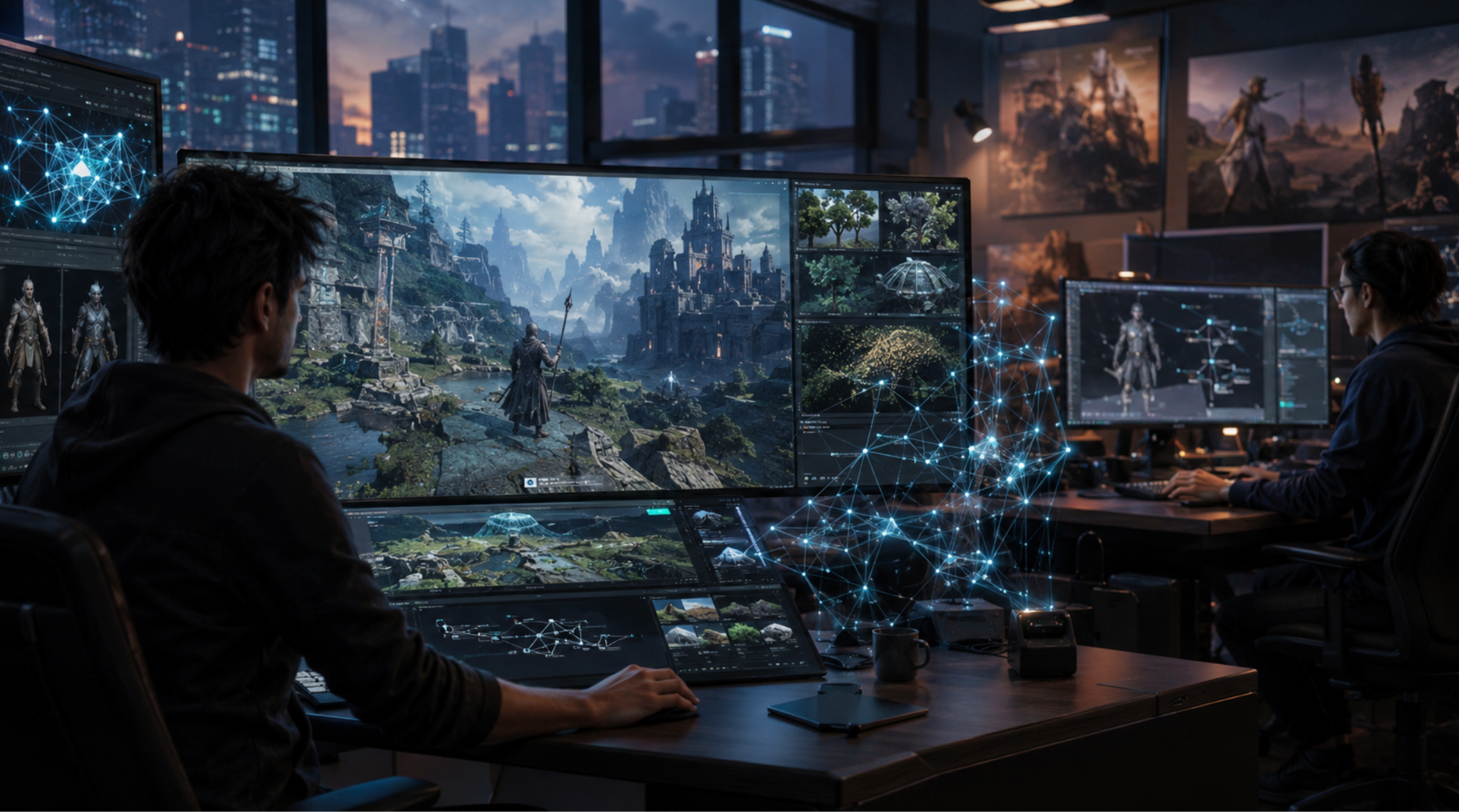
Making a video game takes a lot of work. People create the world, make characters, test the game, fix problems, and make it fun. What changed is how some of that work now starts. AI tools are becoming part of the process. They can help with early ideas, rough dialogue, test scenes, simple level layouts, and even bug checks.
Dialogue Drafts Can Come Together Faster
Game writers deal with a huge amount of text. Main quests need dialogue. Side quests need dialogue. Tutorial characters need dialogue. Random villagers need dialogue, too.
AI can help writers create rough drafts. A writer might ask for several versions of a guard warning, a merchant greeting, or a short argument between two characters. Then the writer can choose what works and rewrite it properly.
The important word is “draft.” AI can produce a starting point, but it does not always understand the soul of a scene. It may sound clear but dull. It may miss the joke. It may make two characters sound too similar.
Quests Can Start From Small Ideas
A lot of game quests begin with a simple task. Find the missing item. Help the stranger. Defeat the creature. Explore the cave. Bring back proof. The hard part is making that task feel worth doing while playing online casino games.
AI can help designers come up with quick quest ideas. It can suggest a character, a reason, a location, and a reward. It might turn a plain task into something with a little more flavour.
Still, not every idea belongs in the game. Designers have to choose what fits the world. Too many random quests can make a game feel busy but empty.
Artists Can Try More Directions
Concept art is full of trial and error. Artists test shapes, colours, outfits, monsters, weapons, buildings, and moods. Some ideas work. Most do not. AI tools can make the early testing stage faster.
An artist might explore ten versions of a desert city, a frozen temple, or a robot soldier before choosing a direction. This can help the team see possibilities earlier.
But a nice image is not the same as game-ready art. The design has to work in motion. It has to fit the game’s style. It has to be modelled, animated, lit, and used in real gameplay. AI can spark ideas. Artists still make those ideas usable.
Testing Can Catch Problems Earlier
Game testing is slow. Testers look for broken quests, missing items, strange character movement, bad collision, crashes, and places where the player can get stuck. AI can help with some of this.
It can run through parts of a game many times. It can look for repeated bugs. It can help sort reports. It can point developers toward problems that appear often. That saves time.
But human testers are still needed. A machine can notice that a door does not open. A human can notice that a puzzle feels boring, a fight feels unfair, or a joke ruins the mood of a serious scene. Games are not only systems. They are experiences. People still need to feel them.
Stories Could React More To Players
Many games promise choice, but the choices are still limited. The writers prepare the paths, and the player picks between them. AI may allow future games to react in more flexible ways.
A character could respond to the player’s exact actions. A quest could change because of a small choice made hours earlier. A town could remember who the player helped and who they ignored.
That sounds exciting. It also sounds risky. If the system is too loose, the story may break. Characters might say things that do not fit. The tone may change in strange ways. A game needs freedom, but it also needs control.
AI Can Make Bad Content Too
AI can help make things faster. That does not always mean better. A game could end up with too many empty quests. Too much plain dialogue. Too many similar characters. Too much content that looks large but feels thin.
Players notice that. A world can be huge and still feel lifeless. A game can have thousands of lines and still have no memorable voice. A quest system can generate endless tasks and still feel like homework.
Human Taste Still Matters Most
AI can create ideas quickly, but it does not know which idea is good for the game. That choice belongs to people.
A designer knows when a level feels too long. A writer knows when a line sounds wrong. An artist knows when a character shape has no personality. A director knows when a scene needs silence instead of more dialogue.
That is why AI will not replace the heart of game development. It may change the workflow, but it cannot replace judgment.