



Medical research often focuses on, well, finding ways to either mimic or block the body’s natural signals. In order to do this, and to figure out what happens when they do it, they have to rely on certain model molecules during their research. Those help them recreate certain natural biological processes in the lab, or even exaggerate them, in an effort to study the impact and the implications.
This allows scientists to check how our bodies react to certain imbalances, stressors and signals, as well as to, thus, discover how certain diseases are caused. And, when they discover that, they can also discover how they can be treated, which is clearly important, as I am sure you understand already. One of those model molecules has proven to be rather useful when it comes to understanding pancreatic and digestive health, and it is known as Caerulein (FI-6934) Cholecystokinin Receptor Agonist.
Now, while Caerulein is still not a household name, there is no denying the fact that it plays a major role in research. The fact that you are here tells me that you’re interested in understanding it better, and that is precisely what we will help with today. So, without any further ado, let us start exploring this particular drug in more details, in an effort to help you get your facts straight on it and understand what it is, how it works, as well as why it is so important for research.
This could perhaps be of some help as well: https://www.researchgate.net/publication/393723158_Ceruletide_Cerulein_FI-6934-Induced_Acute_Pancreatitis_Chronic_Pancreatitis_Model_Protocol
What Is Caerulein (FI-6934) Cholecystokinin Receptor Agonist?
We are, clearly, going to begin with the basics. What exactly is Caerulein (FI-6934) Cholecystokinin Receptor Agonist? Basically, it is a small peptide, meaning a chain of amino acids, that pretty much mimics the effects of a naturally occurring hormone known as cholecystokinin, or CCK. This particular hormone plays a crucial role in the digestion process, as it tells the gallbladder to contract, stimulates the pancreas to actually release enzymes, and works to regulate appetite and the feeling of fullness.
So, what Caerulein (FI-6934) Cholecystokinin Receptor Agonist does is it activates the CCK receptors, both those gastrointestinal and neural types. This way, it drives the digestive function and, in research settings, it is also used to provoke physiological responses or stress. To put it all simply, this is a synthetic mimic of our body’s natural signal molecules, and it is used by scientists to basically push the system in a controlled setting, in an effort to study how the tissue responds.
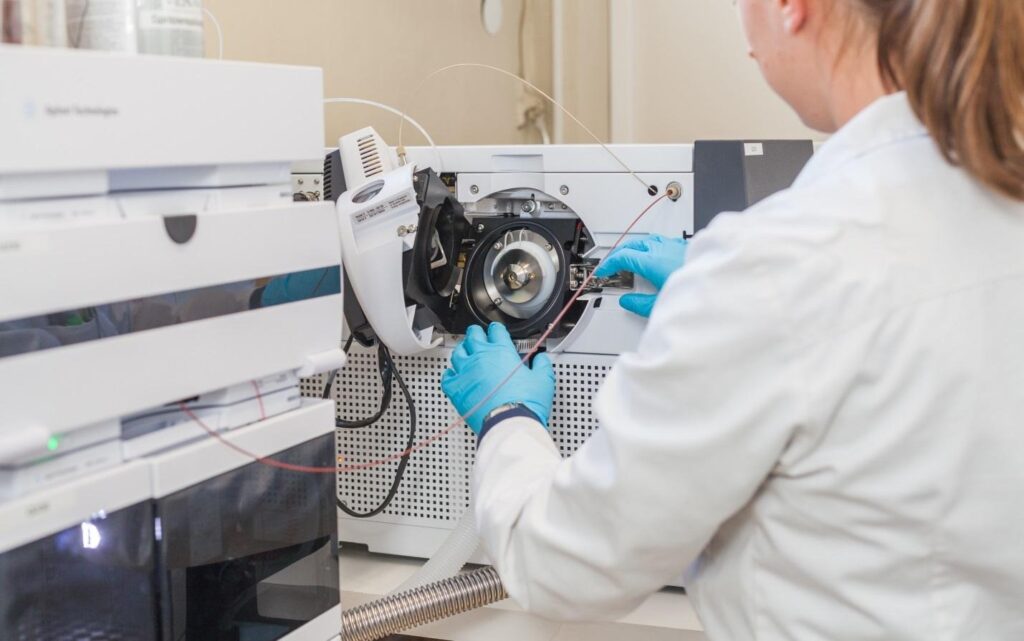
Caerulein (FI-6934) Cholecystokinin Receptor Agonist is best known for its use in the study of pancreatitis, which is basically an inflammatory condition of the pancreas. Lab animals are given carefully measured doses of this substance in order to induce those conditions that resemble human pancreatitis, which helps them study the causes of the disease, as well as test new treatments and generally better understand how inflammation actually damages the pancreatic tissue. Apart from that, it has also become a useful tool in the process of studying digestion, hormone signaling, as well as brain-gut interactions.
As you can see, thus, Caerulein (FI-6934) Cholecystokinin Receptor Agonist is more than just a simple reagent. In other words, it is a window into how certain processes in our bodies work. That is, into how our bodies digest food, maintain balance, as well as respond to stress. So, it is no wonder, therefore, that it has become so valuable in research settings.
How Does It Work?
Now that you’ve understood what this chemical reagent actually is, you are most likely interested in understanding its mechanism of work. And, that shouldn’t be too difficult to understand at all. Basically, Caerulein (FI-6934) Cholecystokinin Receptor Agonist activates those CCK receptors that we have mentioned above, thus mimicking the effects of that natural hormone, albeit in a much stronger, an exaggerated, and a more sustained effect.
Among other things, it stimulates pancreatic enzyme secretion, causes gallbladder contraction, leads to bile ducts responding, and even stimulates gastric acid and pepsin secretion in human studies. Furthermore, it can increase pancreatic blood flow, as well as provoke pancreatitis, that is, inflammation, in certain models, thus allowing the scientists to study the disease much more closely, and to come up with the right treatments. In short, it is used in control settings to check how tissues respond, as well as fail, heal, or signal under stress.
Why Is It Important in Research?
Having understood how it works, there is a chance that you already have some ideas about why it is so important in research, then. Let me make things clearer in any case. For one thing, it is important because it allows for pancreatitis modeling in controlled settings, and that is sure to help the scientists better understand this condition, which is the first step towards developing the right treatment solutions.
Then, apart from that, Caerulein (FI-6934) Cholecystokinin Receptor Agonist helps scientists understand digestive physiology. That is, it helps them check how our digestive organs respond when they are strongly stimulated. Insights into this help them deepen their knowledge on digestion, disease, as well as drug responses.
Of course, since CCK in the brain is implicated in various functions, such as our satiety, feeding behavior, mood, anxiety and more, it is no wonder that scientists want to study it better. This is where Caerulein (FI-6934) Cholecystokinin Receptor Agonist comes into play as well, allowing them to mimic the effects of this hormone in the brain. That leads to being able to check more thoroughly how those gut hormones can impact brain function, as well as our mood and behavior.
In Conclusion
So, to sum things up, Caerulein (FI-6934) Cholecystokinin Receptor Agonist is a rather important research tool. Used in controlled settings, that is, in the labs, it allows scientists to get a deeper understanding of our pancreatic health, as well as digestion, and even the link between the brain and those gut hormones. All of this leads towards a more detailed exploration of how our organs react to certain processes, as well as to drugs, which pretty much allows scientists to come up with new drugs and new treatment processes for different conditions.
