



One thing that is, or at least should be, universal for all people is the wish to become and stay healthy. Of course, there are numerous ways to achieve this, as health comes in different forms. Furthermore, an average person can tackle at least a few areas of life when they look for ways to improve their overall well being. From working out and dressing appropriately in different seasons to eating right and resting enough. Reducing stress also matters, as well as having the right environment to thrive in. All of this is also crucial for some of the best athletes in the world, many of whom are soccer players (footballers). The sport, although it does not look as demanding when compared to basketball, American football, water polo, or martial arts, has its fair share of challenges that require proper work etiquette.
For them, it is mostly about training sessions, various forms of fitness regimes, high tier recovery, and proper diets. However, there are underrated factors in the lives of some of the biggest names in the game. From a peaceful home and family life and sleeping regimes, to yoga, pilates, and various other obsessions. Because if you want to eventually be remembered as one of the best, with dozens of team and individual trophies under your belt, that is what must be done. Cristiano Ronaldo, Lionel Messi, Robert Lewandowski, Luka Modric, Thiago Silva, Zlatan Ibrahimovic, Gianluigi Buffon…the list of both active and retired stars who were still at the top of their game in their late 30s and early 40s keeps growing. Because you do not become a top 10 highest goal scorer in the world without sacrifice, attitude, and routine.
The Foundations of a Healthy Lifestyle
World class soccer players are among the most athletic individuals on the planet, and their success is not accidental. At the highest levels of the sport, physical conditioning, recovery, rest, and diet are treated with scientific precision and consistency. Elite football demands a blend of cardiovascular endurance, muscular strength, agility, speed, and resilience. Players typically engage in training programs that balance high intensity sessions with skill work, strength training, and mobility drills to prepare the body for the explosive and intermittent nature of match play. This multifaceted approach not only enhances performance but also reduces the risk of injury and supports longevity in the sport.
Except for physical preparation, the lifestyle habits of professional soccer players reflect evidence based principles of health and human performance. Training is just one part of the equation, as recovery strategies, nutritional planning, and structured rest play equally vital roles. Scientific research in sports science repeatedly highlights that recovery modalities such as sleep, cold water immersion, active cool down, and nutritional timing influence both short term performance and long term adaptation to training stress. Athletes and their performance teams continually monitor and adjust these variables to maintain peak condition across competitive seasons.
Training Regimens to Build Power, Endurance, and Skill
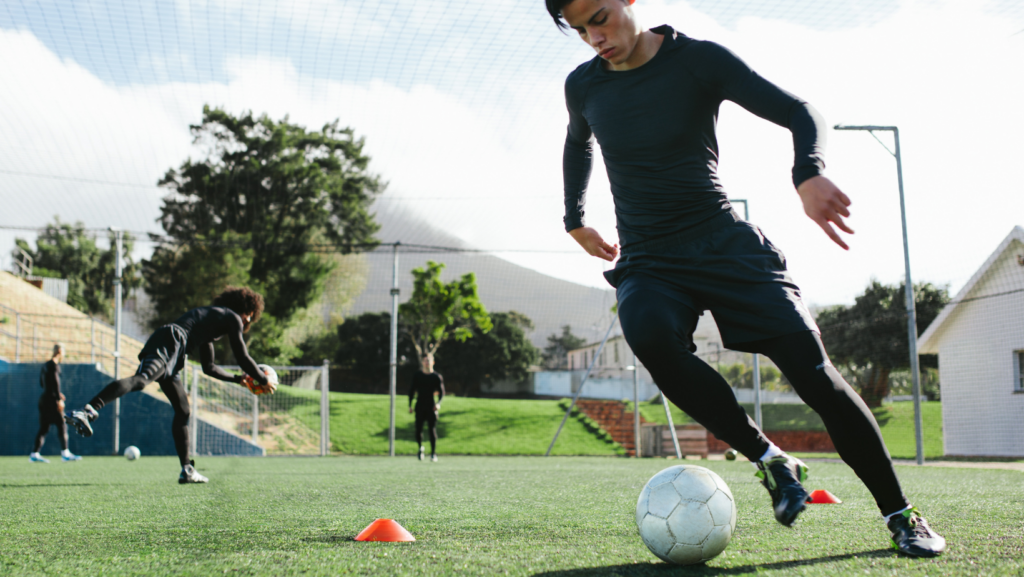
Top level soccer players follow structured training routines tailored to the physical demands of elite competition, and to their own bodies and needs. These routines typically include a mix of strength and resistance training, cardio work, speed and agility drills, sport specific technical work, and tactical practice. For example, Lionel Messi incorporates acceleration drills, agility exercises, and plyometric movements into his training to maintain sharpness, balance, and neuromuscular coordination. These exercises build muscle strength and power while also enhancing his ability to change direction quickly and maintain stability during high speed play. This is crucial for his game and dominance, so naturally, it is something he works on all the time.
His biggest rival, Cristiano Ronaldo, approached training with the intensity required at the elite level, too. Reports suggest that he engages in multiple sessions per day, focusing on different aspects of athletic performance, including strength, sprinting, plyometrics, and football drills. His regimen is designed to cover all facets of physical fitness, from explosive power to cardiovascular endurance, which allows him to play all 90 minutes despite being 40. Such diversified training helps players cope with the physical rigors of competitive matches and long seasons that feature both club and national team duties. Ronaldo’s meticulous planning, with workouts spread across several days each week, reflects how elite athletes balance intensity with strategic variation to prevent injuries, plateaus, and sustain decades long progress.
Recovery Practices, Sleep, and Cold Therapy
Recovery is as critical as the training itself, and failing to do its due diligence results in poor performance and short careers. Elite players understand that physiological adaptation and muscle repair occur during rest, not while training. Sleep is the cornerstone of recovery, and professionals aim for consistent, high quality rest. Research and practical guidance for soccer players emphasize the importance of 8 to 10 hours of sleep per night, sometimes complemented by short daytime naps to support processes such as muscle repair, hormone regulation, and cognitive function. This level of rest helps to maintain reaction time, decision making accuracy, and overall performance under fatigue.
In addition to sleep, many world class players incorporate specific recovery modalities. Cold water immersion and cryotherapy are widely used in professional soccer (and other sports) to reduce inflammation and decrease muscle soreness after intense training or matches. Clubs also use active recovery methods such as low intensity cycling, dynamic stretching, pilates, yoga, swimming, pool workouts, and massage to enhance circulation and support soft tissue recovery. While scientific evidence varies regarding the superiority of any single technique, combined recovery strategies tend to offer the best subjective and objective outcomes for elite athletes. Doing only football drills is not enough. One must first get in shape and remain in it if actual soccer skills and dominance are to follow suit.
Diet and Nutrition Fuel Performance and Repair
Nutrition is a foundational pillar of athletic performance. Elite soccer players work closely with nutritionists and even scientists to optimize meal timing, macronutrient balance, and hydration to meet the demands of training and competition. A typical professional diet is thoughtfully composed of carbohydrates to refill depleted glycogen stores, proteins to facilitate muscle repair, and healthy fats to support hormone regulation and sustained energy levels. Complex carbohydrates from whole grains and athletes’ recovery snacks (a combination of carbs and protein soon after training) help replenish energy stores and accelerate muscle repair.
Going back to the legend himself, Cristiano Ronaldo’s dietary habits exemplify meticulous nutritional planning. Known for consuming multiple small meals throughout the day, his diet emphasizes lean proteins such as fish and chicken, paired with fresh vegetables and whole grains to sustain energy and support recovery. Players also prioritize hydration, often consuming several liters of water daily and minimizing sugary or alcoholic beverages to maintain joint health and optimal metabolic function. Lionel Messi’s diet, in contrast, reflects a Mediterranean style emphasis on nutrient dense foods such as lean proteins, whole grains, fruits, vegetables, and healthy fats like olive oil, which together provide a balanced fuel base for training, competition, and recovery. Anyone can live off this diet, and more and more people do. Try it yourself and enjoy the wonders it brings.
Rest and Mental Balance are Key
Rest is not limited to physical sleep, which many fans and occasional athletes fail to realize. It includes mental breaks and lifestyle balance, too. Professional players value downtime, unwinding, family time, and activities that reduce stress. A balanced lifestyle helps regulate stress hormones, maintain mental capacity and fortitude, and prevent burnout. Structured daily routines that separate training and personal life can aid psychological recovery and promote overall well being. Additionally, the best of the best often use visualization, goal setting, and other psychological strategies to maintain focus and motivation throughout intense seasons.
Messi, for instance, is known to maintain a stable and calm family environment, which he credits with helping him manage pressure and sustain performance. His consistent sleep schedule and commitment to recovery rituals support both physical and mental health, illustrating how even world class athletes prioritize balance in their daily lives. Enjoying downtime with his wife and three sons is surely as important to him as training, diet, and rest, which he would surely confirm if somebody were to ask him! The same goes for any happily married, family oriented footballer. Those with off pitch issues, on the other hand, tend to have prolonged slumps and falls in form, which makes sense considering how detrimental bad habits and stress can be.
Examples from the Elite
It is not all Leo and CR7, either. Erling Haaland, who is still only 25, is another top professional highlighting the importance of mobility and flexibility in elite athleticism. His routine includes extensive stretching sessions, red light therapy to support muscle recovery, and ice baths and saunas to enhance recovery after heavy sessions. He even meditates frequently. Haaland’s approach exemplifies how mobility and recovery complement traditional strength and conditioning work to maintain performance and prevent injury. He is sure to have a very long, injury free career.
Other elite players like Thiago Silva (41) have also demonstrated how disciplined lifestyles contribute to longevity. Silva’s routine includes advanced recovery technologies using hyperbaric oxygen therapy, again showing how top professionals invest in both traditional and cutting edge methods to stay competitive later into their careers. Their body allows them to perform, provide, and enjoy life. Naturally, they take care of it as much as possible.
Cristiano Ronaldo Fitness and Lifestyle: FAQs and Facts
As the epitome of a healthy lifestyle and fitness, at 40 years old, football superstar and one of the best players in the history of the game, Portuguese forward Cristiano Ronaldo, is still going strong. According to fitness experts and physicians, he has the body of a 20 something year old, despite being closer to 50 than 30. Therefore, for a topic like this, his case is the best for a round of frequently asked questions that will bust the myth and shed some light on his incredibly dedicated diet, training regimen, and overall lifestyle.
1. How often does Cristiano Ronaldo train?
Ronaldo typically trains 5 to 6 days a week, sometimes twice a day. He combines team sessions of soccer practice with personal workouts focused on strength, speed, and conditioning.
2. What type of workouts does he prioritize?
His regime includes high intensity interval training (HIIT), sprint drills, plyometrics, weight training, core work, and flexibility exercises to maintain explosive power and agility.
3. Does Ronaldo focus heavily on core training?
Yes. Ronaldo is famous for his powerful core, which he trains almost daily. This helps with balance, jumping ability, shooting power, and injury prevention, all of which he is known for.
4. What does Cristiano Ronaldo eat in a typical day?
His diet is high in protein, moderate in healthy carbohydrates, and low in sugar. Common foods include lean meats, fish, eggs, whole grains, vegetables, and fruit.
5. Does he eat multiple small meals?
Yes. Ronaldo reportedly eats between 5 and 6 small meals per day instead of a few large ones. This helps him maintain energy levels and support muscle recovery.
6. What is his favorite protein source?
Fish, especially cod (bacalhau), is one of his favorites. He also consumes chicken frequently, which he has called “magical” for muscle growth.
7. Does Ronaldo drink alcohol or soda?
He largely avoids alcohol and sugary drinks, preferring water. He is known for promoting hydration and once publicly discouraged the consumption of soda at a press conference. Notably, Coca Cola stocks dropped when he removed it from in front of him during a press conference. He moved the glass bottle out of the camera frame and held up a water bottle, saying in Portuguese: “Water!”
8. How important is sleep in his routine?
Extremely important. Ronaldo follows a structured sleep schedule, sometimes sleeping in short naps (90 minute cycles) rather than one long stretch, to maximize recovery. This also aligns with both his training regime and meal times.
9. Does he use recovery techniques?
Yes. His recovery routine includes ice baths, cryotherapy, massage therapy, stretching, and compression gear to keep his body performing at elite levels. There is no time of day when he does not take care of his body in some way.
10. Is Ronaldo’s physique natural or genetically gifted?
While genetics play a huge role, experts agree that his physique is largely the result of discipline, consistency, strict nutrition, and long term commitment to fitness over decades. There is simply nobody like him in football, with LeBron James (41) and Novak Djokovic (38) being similar cases in other sports.
