


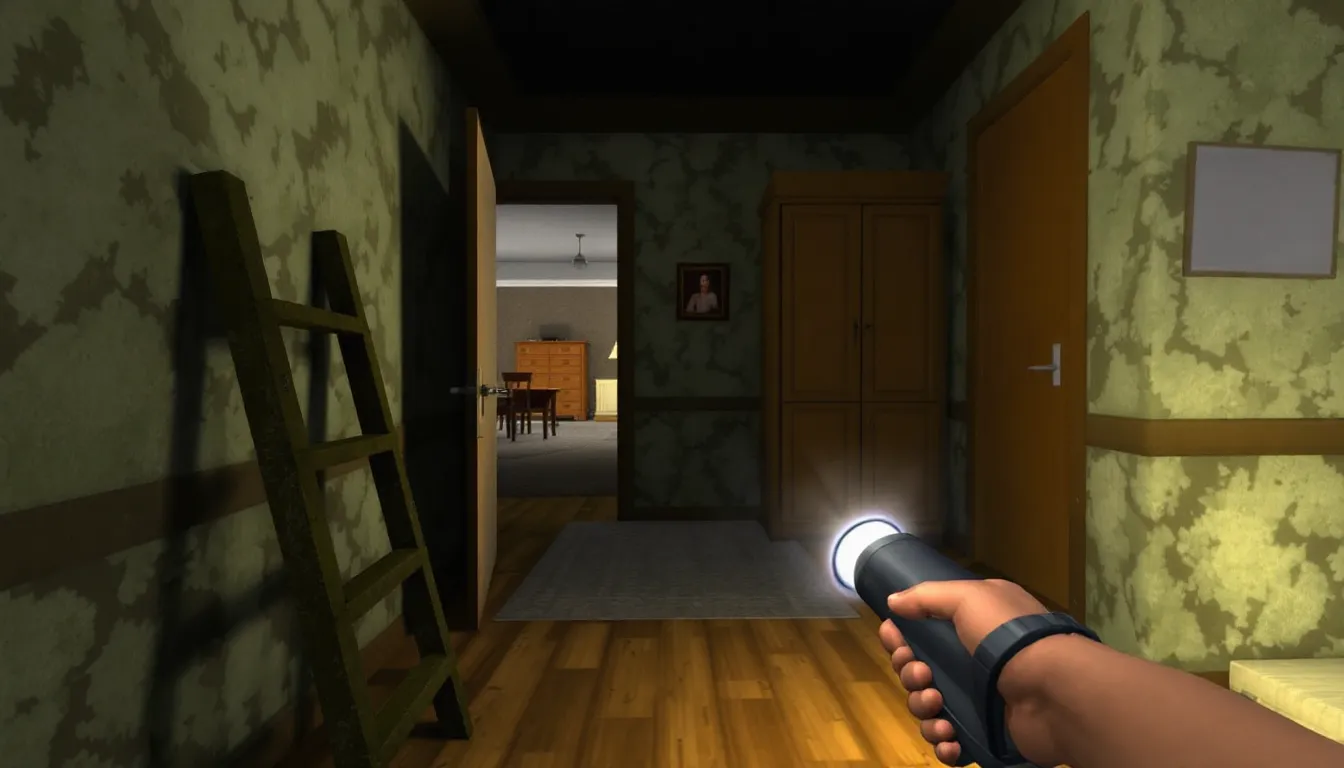
Forgotten Memories stands as one of Roblox’s most atmospheric horror experiences, blending psychological terror with puzzle-solving in a way that’s kept players coming back since its release. Unlike jump-scare-heavy alternatives, this game relies on tension, environmental storytelling, and genuine unease to deliver its scares.
Whether you’re a newcomer struggling with Chapter 1 or a veteran hunting for hidden endings, this guide covers everything you need to survive and master Forgotten Memories. We’ll break down mechanics, walk through each chapter’s puzzles, and share advanced strategies that separate survivors from victims.
Key Takeaways
- Forgotten Memories on Roblox delivers atmospheric horror through puzzle-solving and stealth rather than jump scares, with three chapters across distinct environments.
- Master movement mechanics like stamina management, crouch-walking, and tactical sprinting to survive encounters with the monster that operates on patrol patterns and line-of-sight detection.
- Collect hidden photos across all chapters to unlock the true ending and secret ending that reveal the protagonist’s backstory and the metaphorical nature of the experience.
- Audio cues are your primary warning system—heavy footsteps indicate proximity and breathing sounds mean the creature is within striking distance, making headphones essential.
- Avoid common mistakes like sprinting constantly, skipping story notes, and hiding too early; methodical, observant play separated by reading environmental details determines survival in Forgotten Memories.
- With over 50 million visits and consistent player engagement, Forgotten Memories stands apart from other Roblox horror games by prioritizing coherent storytelling and environmental design over mechanical complexity or multiplayer features.
What Is Forgotten Memories in Roblox?
Forgotten Memories is a single-player horror experience developed by Electric State on Roblox. It launched in early 2019 and has accumulated over 50 million visits, earning its spot among the platform’s most well-crafted horror games.
The game tasks players with navigating through three distinct chapters, each set in increasingly unsettling environments, while solving puzzles, avoiding a relentless creature, and uncovering fragmented story elements hidden throughout.
Gameplay Overview and Core Mechanics
At its core, Forgotten Memories operates like a first-person survival horror game. Players move through linear but explorable levels, collecting items necessary to unlock doors, activate mechanisms, and progress the story.
Key mechanics include:
- Stealth and evasion: The monster can’t be killed or stopped, only avoided
- Inventory management: Limited carrying capacity for items like keys, fuses, and story notes
- Environmental interaction: Players must examine objects, flip switches, and solve context-based puzzles
- Sanity system (subtle): Prolonged exposure to the creature or darkness affects visual clarity
The controls are standard Roblox FPS, WASD for movement, mouse for camera, E to interact, Shift to sprint (limited stamina), and C to crouch. There’s no combat system. Survival depends entirely on awareness and smart movement.
The Story Behind Forgotten Memories
The narrative unfolds non-linearly through collectible notes, environmental details, and cryptic dialogue. Players assume the role of a character experiencing fragmented memories tied to traumatic events across three locations: a family home, an abandoned school, and a derelict hospital.
Without spoiling major reveals, the story explores themes of loss, guilt, and repressed trauma. The monster itself serves as a manifestation of the protagonist’s psychological state rather than a literal threat. Many horror experiences on Roblox lean heavily on shock value, but Forgotten Memories commits to a more restrained, atmosphere-driven approach that rewards attentive players who piece together the lore.
How to Play Forgotten Memories: A Beginner’s Walkthrough
Starting Your First Game
Forgotten Memories doesn’t include a tutorial or onboarding sequence. You spawn directly into Chapter 1 with minimal guidance. Here’s what to expect in your first minutes:
- Adjust your graphics settings before starting if you’re on lower-end hardware. The game runs best on Graphics Quality 6 or higher, but playable performance is possible at 4-5.
- Enable headphones. Audio cues are critical for tracking the monster’s location.
- Explore cautiously. The first room is safe and lets you familiarize yourself with controls.
- Read every note. They provide puzzle hints and context for what’s happening.
There’s no save system mid-chapter. If you die or leave, you restart from the chapter’s beginning. Chapters typically take 15-25 minutes on a first attempt.
Understanding the Map Layout
Each chapter features a semi-open layout with locked areas that open as you solve puzzles and collect keys. Maps aren’t randomly generated, layouts remain consistent across playthroughs, which means memorization helps significantly.
General map structure:
- Safe zones: Usually starting areas or rooms the monster can’t enter
- Transition corridors: Narrow hallways connecting major rooms (high danger)
- Puzzle rooms: Larger areas requiring interaction with multiple objects
- Dead-end hiding spots: Closets, bathrooms, and alcoves for emergency evasion
The game uses environmental lighting to guide you. Lit pathways or rooms with open doors typically indicate progress routes. Dark, cluttered areas often hide collectibles or alternate paths.
Essential Controls and Movement Tips
Mastering movement makes the difference between repeated deaths and smooth progression. Here are mechanics the game doesn’t explicitly teach:
- Sprint management: Stamina depletes in roughly 4 seconds and takes 6 seconds to fully recharge. Don’t sprint unless actively pursued.
- Crouch-walking: Reduces noise and visibility. Use it when the monster is nearby but hasn’t spotted you yet.
- Camera sensitivity: Lower your mouse sensitivity if you tend to overshoot when checking corners. Smooth camera control prevents disorientation.
- Interaction prompts: The “E to interact” prompt appears only when you’re close enough and facing the object directly. If it’s not showing up, adjust your angle.
New players often waste stamina sprinting through empty rooms. Save it for genuine threats. Walk by default, sprint tactically.
Chapter-by-Chapter Guide and Puzzle Solutions
Chapter 1: The House Walkthrough
Chapter 1 introduces core mechanics in a familiar domestic setting that gradually reveals disturbing details.
Key puzzle sequence:
- Living room key: Located on the kitchen counter. Unlocks the living room door.
- Basement fuse: Found in a bedroom drawer upstairs. Take it to the fusebox in the hallway.
- Piano puzzle: In the living room, examine the painting above the piano. It shows a sequence of keys. Play them in order: C, E, G, A.
- Basement descent: Once the piano puzzle is solved, the basement door unlocks. Descend carefully, the monster spawns after you grab the red valve from the basement workbench.
- Bathroom valve placement: Return upstairs (monster is now active) and install the valve on the bathroom sink to trigger the chapter’s conclusion.
Common sticking points: Players often miss the fuse because it’s in a nightstand that blends with the room’s clutter. The piano keys are also easy to misread, refer to the painting carefully.
Chapter 2: The School Walkthrough
Chapter 2 ramps up difficulty with a larger map and more aggressive monster behavior.
Puzzle breakdown:
- Locker combination: Found on a note in the teacher’s lounge. The code is 1-4-7-3. Open locker #23 in the main hallway.
- Chemistry lab key: Inside the locker. Unlocks the lab on the second floor.
- Chemical mixing puzzle: In the lab, you need to combine three chemicals in a specific order. The note on the blackboard provides the sequence: Blue → Green → Red. Pour them into the beaker to create the solution.
- Library access: Use the solution to dissolve the lock on the library door (ground floor).
- Book sequence puzzle: In the library, arrange books on the shelf by publication year: 1923, 1934, 1951, 1967. This opens a hidden passage.
- Final escape: Navigate the passage (monster spawns here) and exit through the emergency door.
Pro tip: The library sequence triggers an extended chase. Clear the path beforehand by opening all doors between the library and exit.
Chapter 3: The Hospital Walkthrough
Chapter 3 is the longest and most complex, featuring multiple monster encounters and interconnected puzzles.
Full progression:
- Reception desk: Grab the ward key from behind the desk.
- Patient files puzzle: In the records room, you need to match patient files to room numbers. The solution is on a clipboard: Room 204 → File A, Room 207 → File C, Room 210 → File B.
- Medication storage: Access the pharmacy using the code from File C: 5-8-2-9.
- Surgery prep room: Collect the surgical saw (you’ll need this later) and the elevator key card.
- Basement morgue: Use the elevator to descend. The monster is highly active here. Locate the power switch in the morgue to restore lights.
- Final door mechanism: Return to the third floor. The final door requires inserting three colored keycards (found in rooms 204, 207, and 210) in sequence: Yellow, Blue, Red.
Most players struggle with the records room puzzle because the clipboard is partially obscured. It’s on the desk nearest the filing cabinets. The game occasionally has connection issues that can cause progress loss, so if you’re deep into Chapter 3, avoid server lag by closing other browser tabs.
Advanced Strategies and Pro Tips for Survival
How to Avoid the Monster Effectively
The monster in Forgotten Memories operates on patrol patterns with reactive triggers. It doesn’t spawn randomly, specific actions or locations activate it.
Monster behavior mechanics:
- Audio cues: Heavy footsteps indicate proximity. Breathing sounds mean it’s within 15 studs.
- Line of sight: The creature needs direct visual contact for 1.5 seconds to initiate a chase.
- Chase duration: Chases last approximately 20 seconds if you break line of sight. It returns to patrol afterward.
- Detection range: Roughly 30 studs in lit areas, 20 studs in darkness.
Evasion tactics:
- Stop moving when you hear footsteps. Movement generates noise that increases detection radius.
- Use corners: Breaking line of sight for just 2-3 seconds often causes the monster to abandon pursuit.
- Don’t hide immediately: If spotted, sprint away first to gain distance, THEN hide. Hiding too early lets it check your location.
- Crouch in shadows: The creature prioritizes lit areas during patrols.
Many experienced players treat the monster like a puzzle element rather than a pure threat. Learn its routes and time your movements accordingly.
Best Hiding Spots in Each Chapter
Chapter 1 – The House:
- Master bedroom closet (top floor, left side): Safest spot, rarely checked
- Bathroom bathtub (behind shower curtain): Quick access from multiple rooms
- Kitchen pantry: Good for basement-related chases
Chapter 2 – The School:
- Locker row alcove (near the gym): Monster rarely patrols this dead-end
- Teacher’s lounge desk (underneath): Requires crouching but very reliable
- Janitor’s closet (second floor): Only works if you close the door behind you
Chapter 3 – The Hospital:
- Operating room cabinet (surgical wing): Monster doesn’t enter unless you’re seen going in
- Morgue drawers (basement): Risky but effective during extended chases
- Reception desk (behind, crouched): Surprisingly effective early in the chapter
Never use the same hiding spot consecutively. The game’s AI tracks recent hiding locations and checks them more frequently.
Item Management and Resource Collection
Forgotten Memories limits inventory to 4 item slots. Key items (those required for puzzle progression) can’t be dropped, so you’ll often need to decide what to carry.
Inventory priority:
- Keys and essential items: Always take these immediately
- Story notes: Read them on the spot: they don’t need to be carried
- Optional collectibles: Only grab these if you’re going for completion
Resource tips:
- Flashlight (available in Chapters 2 and 3): Uses battery charge. Lasts approximately 3 minutes of continuous use. Turn it off in safe areas.
- Medical items (rare spawns in Chapter 3): Restore vision clarity if your sanity is low. Not critical for completion.
- Collectible photos: Hidden in each chapter. Required for unlocking alternate endings.
Don’t hoard items “just in case.” If you haven’t needed something for 5 minutes, you probably won’t. The approach to managing limited resources in horror games applies here, use what you have instead of saving everything for a crisis that never comes.
Common Mistakes to Avoid in Forgotten Memories
Even experienced horror game players make predictable errors in Forgotten Memories. Here’s what to avoid:
Sprinting constantly: New players treat Shift like a default movement mode. This drains stamina, makes you louder, and leaves you vulnerable when the monster actually appears. Walk by default.
Ignoring audio cues: Playing without headphones or with music over the game audio removes your primary warning system. The monster telegraphs its presence clearly if you’re listening.
Backtracking without purpose: The game’s linear structure means you rarely need to revisit areas. If you’re lost, you’ve likely missed an interaction prompt rather than needing to go back.
Hiding too early: Ducking into the first closet when you hear footsteps often traps you in a dead end. Create distance first, hide second.
Skipping notes: Story notes frequently contain puzzle solutions or hints about upcoming mechanics. Reading them isn’t just for lore, it’s practical.
Panicking during chases: Erratic movement and random turns usually get you caught. Pick a direction, commit to it, and break line of sight methodically.
Not adjusting graphics: If you’re experiencing frame drops, lower your graphics quality. Smooth performance matters more than visual fidelity in a game where timing and reaction speed determine survival.
Assuming safe rooms stay safe: Some rooms are safe early in a chapter but become patrol zones after certain triggers. Don’t camp in one spot indefinitely.
The game punishes impatience and rewards methodical, observant play. Treat each chapter like a puzzle box with teeth rather than an action sequence.
Secrets, Easter Eggs, and Hidden Content
Unlockable Endings Explained
Forgotten Memories features three distinct endings determined by actions taken during the chapters:
Standard Ending: Complete all three chapters without collecting optional photos. This provides basic narrative closure but leaves questions unanswered.
True Ending: Collect all 9 hidden photos (3 per chapter) and complete the game. This unlocks additional cutscenes that explain the protagonist’s backstory and the nature of the monster. Photo locations:
- Chapter 1: Behind the refrigerator, inside the attic crawlspace, under the basement stairs
- Chapter 2: Inside locker #7, behind the library circulation desk, in the chemistry lab cabinet
- Chapter 3: In the morgue drawer (third from left), behind the reception desk monitor, inside the surgical supply closet
Secret Ending: Triggered by interacting with a specific sequence of objects across all chapters. On Roblox Windows platforms, this can be tricky due to interaction prompt inconsistencies, but the sequence is:
- Chapter 1: Click the family photo on the mantle three times
- Chapter 2: Write “REMEMBER” on the classroom whiteboard (interact with the eraser first)
- Chapter 3: Examine all patient files before solving the puzzle
This ending reveals the game’s metaphorical nature and recontextualizes the entire experience.
Hidden Items and Collectibles
Beyond the photos required for endings, several Easter eggs reference other horror games and Roblox experiences:
Developer notes: Small blue text boxes hidden in obscure corners. They contain meta-commentary about game design choices. There are 5 total across all chapters.
Radio broadcasts: Interacting with radios in each chapter plays fragmented transmissions. Collecting all three unlocks a badge and provides additional lore.
Mirror interactions: Looking into mirrors for extended periods (approximately 15 seconds) in specific bathrooms triggers brief visual distortions that hint at the protagonist’s mental state.
Music box sequence (Chapter 1): Playing the piano incorrectly three times in a row triggers an alternate audio track, a distorted version of the game’s main theme.
These elements don’t affect gameplay but significantly enrich the narrative for players invested in the story. The attention to detail in Roblox horror experiences like this one shows how the platform has evolved beyond simple jump-scare simulators.
How Forgotten Memories Compares to Other Roblox Horror Games
Forgotten Memories occupies a specific niche in Roblox’s horror ecosystem. Here’s how it stacks up against alternatives:
vs. Piggy: Piggy emphasizes multiplayer, fast-paced gameplay, and replayability through different modes. Forgotten Memories is strictly single-player and prioritizes atmosphere over action. If you want co-op horror, Piggy wins. For solo psychological tension, Forgotten Memories delivers better.
vs. The Mimic: The Mimic offers more chapters and longer content overall but relies more heavily on jump scares and visual shocks. Forgotten Memories is shorter but more cohesive in its narrative and tone. The Mimic feels like an anthology: Forgotten Memories feels like a complete short story.
vs. Apeirophobia: Apeirophobia explores liminal spaces and existential dread with minimal monster encounters. Forgotten Memories balances creature threats with environmental storytelling. Players who found Apeirophobia too passive will prefer Forgotten Memories’ active threat element.
vs. Identity Fraud: Identity Fraud is maze-based with randomized elements and multiple monster types. It’s more mechanically complex but less narratively focused. Forgotten Memories trades replayability for a tighter, more authored experience.
Unique strengths of Forgotten Memories:
- Superior environmental storytelling and visual design
- Coherent three-act structure with meaningful progression
- Puzzle complexity that respects player intelligence
- Subtle horror that builds dread rather than spamming scares
- Meaningful unlockables tied to lore rather than cosmetics
If you’re the type who appreciates games like Amnesia or Outlast over Five Nights at Freddy’s, Forgotten Memories aligns more with your tastes.
Latest Updates and What’s New in 2026
As of March 2026, Forgotten Memories hasn’t received major content updates since late 2024, but the developer has implemented quality-of-life improvements:
Recent patches (version 2.3.1, released January 2026):
- Performance optimization: Reduced average load times by approximately 30% on lower-end devices
- Bug fixes: Resolved an issue where the Chapter 3 elevator key card could clip through the floor
- Audio improvements: Remastered ambient sound effects for better spatial awareness
- Accessibility options: Added a reduced motion toggle for players sensitive to camera shake effects
- Mobile optimization: Improved touch controls and UI scaling for mobile players (though the experience is still best on PC)
Platform availability (2026):
- PC: Full support, optimal experience
- Mobile (iOS/Android): Playable but with compromised controls and visual quality
- Xbox: Supported through Roblox on Xbox app
- PlayStation/Switch: Not available (Roblox platform limitations)
The developer confirmed in February 2026 that a potential Chapter 4 is in early concept stages but provided no release window. Community speculation suggests it won’t arrive before late 2026 at the earliest.
Community activity: Even though no major updates, the game maintains steady player counts (averaging 800-1,500 concurrent players) thanks to its reputation and occasional YouTuber/streamer coverage.
Current known issues:
- Occasional interaction prompt failures on objects near walls (workaround: adjust camera angle)
- Rare monster AI pathing glitches in Chapter 2’s library (restart the chapter if the monster gets stuck)
- Some players on older Roblox accounts report slightly slower load times due to legacy data conflicts
The developer remains active in the game’s community server and regularly responds to bug reports, even if major content additions aren’t currently planned.
Conclusion
Forgotten Memories proves that Roblox can deliver genuinely compelling horror experiences when developers prioritize atmosphere, narrative cohesion, and thoughtful game design. It’s not the longest horror game on the platform, nor the most mechanically complex, but it executes its vision with confidence and craft.
Whether you’re chasing all three endings, hunting for hidden collectibles, or just experiencing it once for the story, Forgotten Memories rewards players who engage with it on its own terms. The puzzles challenge without frustrating, the monster threatens without feeling unfair, and the narrative provides just enough clarity to be satisfying while leaving room for interpretation.
For players new to Roblox horror or veterans looking for something more substantial than jump-scare compilations, this remains one of the platform’s essential experiences. Just remember: listen for footsteps, manage your stamina, and read every note. The game gives you everything you need to survive, if you’re paying attention.